
The Five Freedoms: What They Really Mean for Egypt's Street Animals


Originally developed in the UK in the 1960s and now adopted by welfare organizations worldwide, The Five Freedoms are the global framework for animal welfare.
Here's what the Five Freedoms look like when we stop thinking of street animals as a problem to solve, and start thinking of them as neighbours and members of our communities whose quality of life we can improve.
1. Freedom from Hunger, Malnutrition and Thirst
Community feeding points are one of the simplest, highest-impact things a neighbourhood can do for its street animals. A clean bowl of water, refilled daily, especially during the summer when temperatures are high.
Safe species-specific food left in the same spot (away from residential buildings) each evening keeps a whole community of animals fed.

2. Freedom from Discomfort
Street animals are already in their homes. Our job as a community is to care for them, and that includes not disturbing them or their environment.
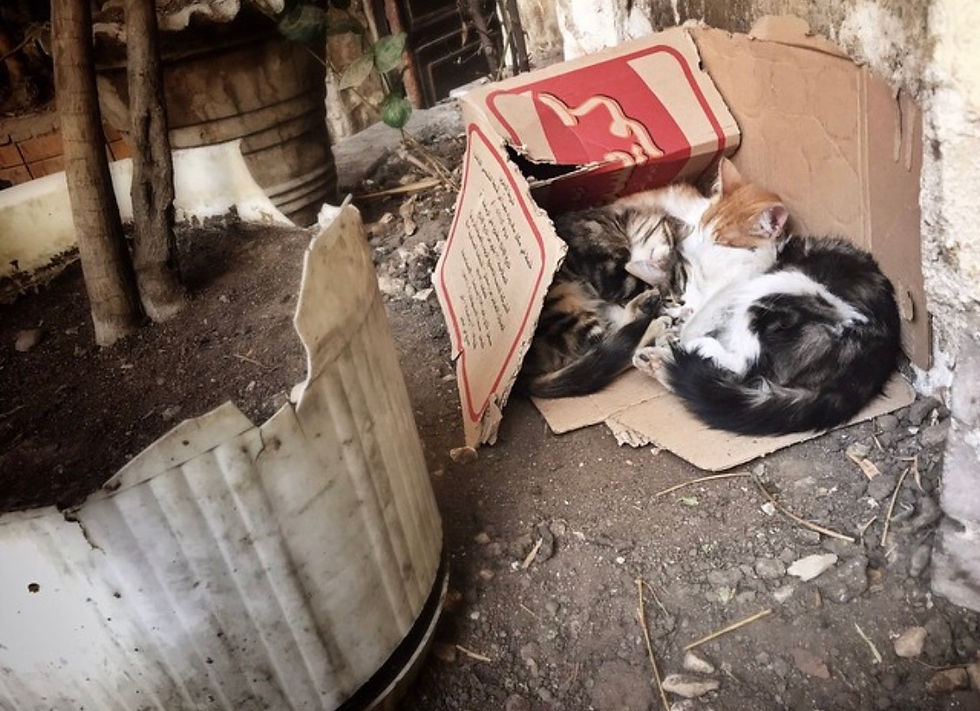
In winter, boxes or wooden homes with straw or blankets tucked into their favourite spots make a big difference. In summer, shade and water do too, check out @thisis_kar's initiative #BOW_Egypt
3. Freedom from Pain, Injury and Disease
This is one of our favourites for our Baladi animals. TNR — Trap, Neuter, Return — is the single most effective intervention for street animal welfare. It stabilizes populations, reduces fighting, prevents the suffering of unwanted litters, and keeps the same healthy, vaccinated animals in their territory.
Rabies and core vaccinations, parasite control, and basic wound care when an animal is hurt are a great way to keep them healthy and free from diseases. Many Egyptian vets will offer rescue pricing if you ask.

4. Freedom to Express Normal Behavior
The behaviour of street dogs and cats is mostly: roaming familiar territories, sleeping on top of cars or trees, socialising with their friends and eating from garbage. One behaviour that usually upsets people is barking. Barking is a normal allomimetic behaviour and dogs will bark to express emotions. Allowing them to bark and guard their territory (your neighbourhood) helps keep them feeling safe and keeps your area free of intruders.
Respecting this freedom means:
Not chaining or confining street animals "for their safety"
Not breaking up bonded groups by sending them to shelters
Not relocating an animal away from their territory
Letting them rest, roam, and socialize on their own terms
5. Freedom from Fear and Distress
Speaking up against poisoning campaigns and municipal culls
Stopping people from throwing stones (and teaching them why)
Never cornering, chasing, or grabbing a street animal
Reporting cruelty when you see it, because it is against the law!
For animals in homes, welfare often means more comfort, more enrichment, more care.
For street animals, welfare often means less interference, and targeted support: food, water, TNVR, vet care, and safety from human cruelty.


Comments